

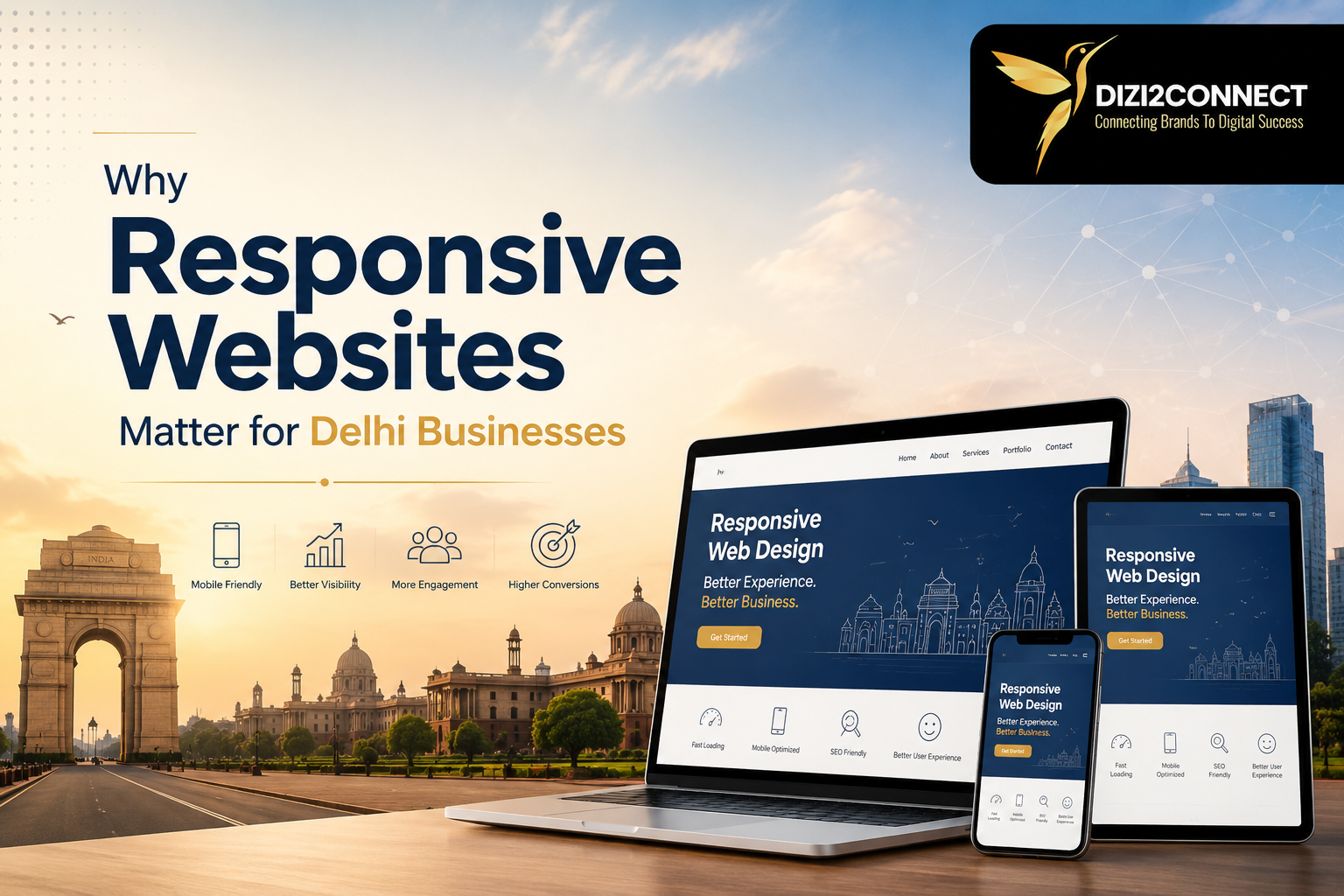
The digital behavior of customers in Delhi has changed significantly over the last few years, with most users now relying on smartphones to search, compare, and interact with businesses. Consumers expect fast-loading, easy-to-navigate, and mobile-friendly websites that provide instant access to information. If a website does not function properly on mobile devices, users often leave within seconds and switch to competitors who offer a smoother and more reliable experience.
This shift in consumer expectations clearly explains why responsive websites matter for Delhi businesses more than ever before. Whether a company operates in retail, healthcare, education, real estate, hospitality, or professional services, a responsive website is now a core requirement for attracting customers, improving engagement, and driving business growth in an increasingly digital marketplace.
What Is a Responsive Website and How Does It Work?
A responsive website is a website that automatically adjusts its layout, images, text, and navigation elements based on the screen size and device being used by visitors. Whether customers access the website from a smartphone, tablet, laptop, or desktop computer, they receive a consistent, user-friendly, and visually appealing experience. This flexibility ensures that content remains easy to read and navigate without requiring zooming or horizontal scrolling.
Modern responsive web design uses technologies such as flexible grids, scalable images, and adaptive layouts to optimize content for different screen resolutions. Instead of creating separate mobile and desktop websites, businesses can manage a single website that works efficiently across all devices. This approach improves user experience, simplifies website management, and supports better SEO performance.
Why Responsive Websites Matter for Delhi Businesses in 2026?
In 2026, customer expectations have shifted towards fast, seamless, and mobile-friendly digital experiences. Since most consumers in Delhi use smartphones to search for local products and services, businesses can no longer rely on websites designed only for desktop users. This growing dependence on mobile browsing clearly demonstrates why responsive websites matter for Delhi businesses, as responsive design improves accessibility, customer satisfaction, and business growth opportunities.
- Supports Mobile-First Consumer Behavior: Most customers in Delhi search for businesses using smartphones and tablets. Responsive websites ensure a smooth browsing experience on every device.
- Improves Search Engine Rankings: Google prioritizes mobile-friendly websites through its mobile-first indexing system. Responsive design helps businesses achieve better visibility in search results.
- Enhances User Experience: Visitors can easily navigate pages without zooming or excessive scrolling. This improves engagement and encourages users to stay longer on the site.
- Increases Leads and Conversions: Mobile-friendly forms and call buttons simplify customer interactions. This results in more inquiries, bookings, and business opportunities.
- Builds Brand Trust and Credibility: A modern and responsive website creates a strong first impression. Customers are more likely to trust businesses with professional websites.
- Creates a Competitive Advantage: Delhi’s digital marketplace is highly competitive across every industry. Responsive websites help businesses stand out from competitors with outdated designs.
How Does Responsive Design Improve SEO for Delhi Businesses?
Responsive design plays a crucial role in improving SEO because Google prioritizes websites that provide a seamless experience across all devices. Since a large number of consumers in Delhi search for products and services using smartphones, businesses need mobile-friendly websites to remain competitive. A responsive website improves usability, engagement, and search visibility, ultimately supporting long-term digital growth.
- Supports Mobile-First Indexing: Google primarily uses the mobile version of a website for indexing and ranking. Responsive design ensures your website meets these mobile requirements effectively.
- Reduces Bounce Rates: Visitors are more likely to stay on websites that display correctly on every device. This improved user experience sends positive engagement signals to search engines.
- Improves Website Loading Speed: Responsive websites are often optimized for faster performance on mobile devices. Faster loading times contribute to better rankings and higher user satisfaction.
- Uses a Single URL Structure: A responsive website uses one URL for both desktop and mobile visitors. This makes it easier for search engines to crawl and index website content.
- Boosts User Engagement Metrics: Better navigation encourages visitors to spend more time on the website. Increased session duration can positively influence SEO performance.
- Strengthens Local SEO Performance: Responsive websites perform better for mobile and location-based searches. This helps Delhi businesses attract more local customers and inquiries.
Can Responsive Websites Increase Conversion Rates?
Yes, responsive websites can significantly increase conversion rates by providing users with a seamless and frustration-free browsing experience across all devices. When visitors can easily navigate pages, read content, fill out forms, and access important information on their smartphones or tablets, they are more likely to take desired actions such as making inquiries, booking services, or completing purchases. This improved usability directly contributes to higher customer engagement and better business outcomes.
Responsive design also helps businesses optimize important conversion elements such as call-to-action buttons, contact forms, and checkout processes for mobile users. Features like click-to-call buttons, faster page loading speeds, and simplified navigation reduce barriers that often prevent customers from converting. As a result, businesses can generate more leads, improve sales performance, and maximize the return on their digital marketing efforts.
How Does Website Speed Affect Delhi Businesses?

Website speed has a direct impact on customer experience, search engine rankings, and business conversions. In a fast-paced city like Delhi, users expect websites to load within a few seconds and often leave if pages take too long to appear. A fast-loading website helps businesses retain visitors, improve engagement, and generate more inquiries and sales.
- Improves User Experience: Visitors prefer websites that load quickly and provide instant access to information. Faster websites create a smoother browsing experience across all devices.
- Reduces Bounce Rates: Slow-loading pages often cause users to leave before viewing the content. Faster websites encourage visitors to stay and explore more pages.
- Boosts Search Engine Rankings: Google considers page speed an important ranking factor for SEO. Faster websites have a better chance of appearing higher in search results.
- Increases Conversion Rates: Quick-loading websites make it easier for users to complete desired actions. This can lead to more inquiries, bookings, purchases, and customer leads.
- Supports Mobile Users: Many customers in Delhi browse websites using mobile internet connections. Optimized website speed ensures a better experience for these users.
- Strengthens Brand Reputation: A fast website creates a professional and trustworthy first impression. Customers are more likely to trust businesses with reliable online experiences.
Why Do Local SEO Strategies Benefit from Responsive Websites?
Local SEO has become essential for businesses that want to attract customers within Delhi and nearby areas. Since many users perform location-based searches on mobile devices, responsive websites help businesses improve visibility, provide better user experiences, and increase local inquiries. Combining responsive design with local SEO strategies can significantly strengthen a business’s online presence.
- Improves Mobile Search Visibility: Responsive websites perform better in mobile search results and local listings. This helps businesses attract customers searching on smartphones.
- Supports “Near Me” Searches: Many users search for services using location-based keywords and phrases. Responsive websites improve the experience for these high-intent searches.
- Enhances Google Business Profile Traffic: Visitors from local listings expect websites to work perfectly on mobile devices. A responsive site helps convert these visitors into potential customers.
- Reduces Bounce Rates from Local Visitors: Users are more likely to stay when the website loads quickly and displays properly. Lower bounce rates can positively impact local SEO performance.
- Improves User Engagement Signals: Better navigation encourages users to spend more time exploring the website. Strong engagement metrics support improved search visibility.
- Increases Local Enquiries and Leads: Click-to-call buttons and mobile-friendly forms simplify customer interactions. This helps businesses generate more inquiries from local audiences.
What Industries in Delhi Benefit Most from Responsive Websites?
Almost every industry can benefit from responsive web design, but some sectors in Delhi depend more heavily on mobile traffic and online customer interactions. Since consumers increasingly use smartphones to research services, compare options, and make purchasing decisions, responsive websites help businesses improve customer experience and maximize conversions.
- Healthcare and Medical Services: Patients often search for doctors, clinics, and hospitals using mobile devices. Responsive websites make appointments, contact details, and services easier to access.
- Educational Institutions: Schools, colleges, and coaching centers attract students through online searches. Mobile-friendly websites help parents and students find information quickly.
- Real Estate Businesses: Property buyers frequently browse listings while traveling or visiting locations. Responsive websites improve property viewing experiences across all devices.
- Restaurants and Hospitality Businesses: Customers often check menus, locations, and reviews using smartphones. Responsive websites help increase bookings and customer inquiries.
- Retail and E-commerce Stores: Online shoppers expect smooth browsing and checkout experiences on mobile devices. Responsive websites reduce cart abandonment and improve sales conversions.
- Professional and Local Service Providers: Lawyers, consultants, and repair services rely heavily on local online searches. Responsive websites help generate more leads and improve customer trust.
How Does Responsive Design Improve Brand Credibility?
A website is often the first interaction potential customers have with a business, making first impressions extremely important. A responsive website demonstrates professionalism by providing a consistent and seamless experience across smartphones, tablets, and desktops. This improves customer confidence and helps businesses build stronger relationships with their audience.
- Creates a Professional First Impression: A modern and responsive website reflects positively on the business and its services. Customers are more likely to trust brands with polished digital experiences.
- Provides Consistent Branding Across Devices: Responsive design ensures logos, colors, and content appear correctly everywhere. This consistency strengthens brand recognition and customer confidence.
- Improves User Experience: Easy navigation and readable content make the website more enjoyable to use. Positive experiences encourage visitors to view the business as reliable.
- Demonstrates Commitment to Customers: Businesses with responsive websites show they value customer convenience and accessibility. This helps create stronger trust among potential clients.
- Reduces Frustration and Abandonment: Websites that work properly on every device minimize usability problems. Customers are more likely to stay and engage with the brand.
- Supports Positive Purchase Decisions: A professional website can influence customers during the decision-making process. Strong credibility often leads to more inquiries, bookings, and sales.
Is Responsive Design More Cost-Effective Than Separate Websites?
Many businesses still consider maintaining separate desktop and mobile websites to serve different users. However, this approach often increases development costs, requires duplicate content management, and creates additional maintenance responsibilities. Managing two versions of the same website can also lead to inconsistencies in design, functionality, and user experience.
Responsive web design offers a more cost-effective solution by using a single website that automatically adapts to all screen sizes and devices. Businesses only need to update content, fix issues, and manage one platform instead of multiple versions. This reduces technical complexity, lowers long-term operational costs, and improves overall efficiency.
What Features Should Delhi Businesses Include in Responsive Websites?
A responsive website should offer more than just mobile compatibility; it should also provide a smooth, fast, and user-friendly experience across all devices. Delhi businesses need features that improve accessibility, engagement, and conversions while meeting modern customer expectations. Including the right elements can help businesses maximize the value of their online presence.
- Mobile-Friendly Navigation: Menus should be simple, organized, and easy to use on smaller screens. Clear navigation helps visitors quickly find important information and services.
- Fast Loading Speed: Pages should load quickly to keep visitors engaged and reduce bounce rates. Faster websites improve both user experience and SEO performance.
- Click-to-Call Functionality: Mobile users prefer calling businesses directly with a single tap. Click-to-call buttons make customer communication faster and more convenient.
- Responsive Images and Media: Images and videos should automatically adjust to different screen sizes. This ensures visual content remains attractive and easy to view.
- Mobile-Friendly Contact Forms: Forms should be simple to complete on smartphones and tablets. Easy form submission helps increase inquiries and lead generation.
- Secure HTTPS Protection: Website security helps protect customer information and build trust. HTTPS also contributes positively to search engine rankings and credibility.
How Can Businesses Measure Responsive Website Success?
A responsive website should deliver measurable improvements in user experience, engagement, and business performance. Delhi businesses can track various metrics to understand whether their website is effectively serving visitors across different devices. Monitoring these indicators helps businesses identify strengths and areas for further optimization.
- Monitor Mobile Traffic Growth: Increasing mobile visitors often indicates that the website is accessible and user-friendly. This shows that the responsive design is attracting and retaining more users.
- Track Bounce Rate: A lower bounce rate suggests visitors are finding the website useful and engaging. Responsive websites typically encourage users to explore additional pages.
- Measure Conversion Rates: Businesses should track inquiries, bookings, purchases, or form submissions regularly. Higher conversions often indicate a successful responsive user experience.
- Analyze Session Duration: Longer average visit times show that users are interacting with website content. This is a strong indicator of improved usability and engagement.
- Review Page Load Speed: Faster loading pages contribute to better customer experiences and SEO performance. Speed improvements are an important measure of responsive website success.
- Evaluate Local Enquiries and Leads: Growth in calls, messages, and enquiries can indicate better mobile accessibility. Responsive websites often help businesses attract more local customers.
What Happens If Businesses Ignore Responsive Design?
Ignoring responsive design can significantly impact a business’s online visibility, customer experience, and revenue growth. As mobile internet usage continues to increase in Delhi, customers expect websites to work seamlessly on every device. Businesses that fail to meet these expectations risk losing potential customers to competitors with better digital experiences.
- Higher Bounce Rates: Visitors often leave websites that are difficult to navigate on mobile devices. This results in lower engagement and missed business opportunities.
- Lower Search Engine Rankings: Google prioritizes mobile-friendly websites through mobile-first indexing. Non-responsive websites may struggle to compete in search results.
- Poor User Experience: Users may face issues such as zooming, scrolling, and broken layouts. These frustrations can negatively affect customer perception of the brand.
- Reduced Leads and Conversions: Complicated forms and navigation discourage users from taking action. This can lead to fewer inquiries, bookings, and online sales.
- Loss of Competitive Advantage: Competitors with responsive websites often attract and retain more customers. Businesses with outdated websites may gradually lose market share.
- Damage to Brand Reputation: An outdated website can make a business appear unprofessional or unreliable. Customers often associate website quality with service quality and trustworthiness.
Explore Our Recent Posts
- How LinkedIn Marketing Helps Delhi Service Businesses
- Why Content Marketing Is Essential for SEO in Delhi
- Why Email Marketing Still Delivers High ROI for Delhi Businesses
- How WhatsApp Marketing Helps Businesses Increase Customer Response
- Why Online Reputation Management Matters for Delhi Businesses
Conclusion
The importance of responsive web design continues to grow as customer behavior shifts towards mobile browsing and digital interactions. Businesses that deliver seamless experiences across smartphones, tablets, and desktops are better positioned to improve customer satisfaction, increase engagement, and generate more conversions. In a competitive market like Delhi, a responsive website has become a necessity rather than an optional upgrade.
The focus for businesses is no longer on whether they should adopt responsive design but on how quickly they can implement it to remain competitive. Organizations That Understand Why Responsive Websites Matter for Delhi Businesses can achieve stronger SEO performance, better user experiences, and sustainable long-term growth. Investing in responsive web design today helps businesses prepare for the evolving digital demands of tomorrow.
Frequently Asked Questions
1. Why is a responsive website important for local businesses in Delhi?
A responsive website ensures that customers can access information easily from smartphones, tablets, and desktop devices. Since many local searches happen on mobile devices, businesses need mobile-friendly experiences to remain competitive. Responsive websites also support stronger local SEO performance.
2. Does responsive web design improve Google rankings?
Responsive design contributes positively to SEO because Google uses mobile-first indexing when evaluating websites. Mobile usability, loading speed, and user experience all influence rankings. Responsive websites generally perform better across these important factors.
3. How much does a responsive website benefit conversions?
Responsive websites improve conversions by simplifying navigation, form completion, and purchasing processes. Users are more likely to contact businesses or complete transactions when websites function smoothly on mobile devices. Improved usability often leads to measurable growth in leads and sales.
4. Are responsive websites necessary for small businesses?
Small businesses benefit significantly from responsive websites because they compete with larger brands for customer attention. Mobile-friendly experiences help create credibility and professionalism. Responsive design allows smaller organizations to compete more effectively online.
5. What is the difference between mobile-friendly and responsive websites?
Mobile-friendly websites function on mobile devices but may not automatically adapt to every screen size. Responsive websites dynamically adjust layouts and content for all devices and resolutions. This provides a more consistent user experience.
6. How often should businesses update their responsive websites?
Businesses should review website performance regularly and implement updates whenever necessary. Design trends, search engine requirements, and customer expectations evolve. Annual reviews and ongoing optimization help maintain competitiveness.
Tags: