


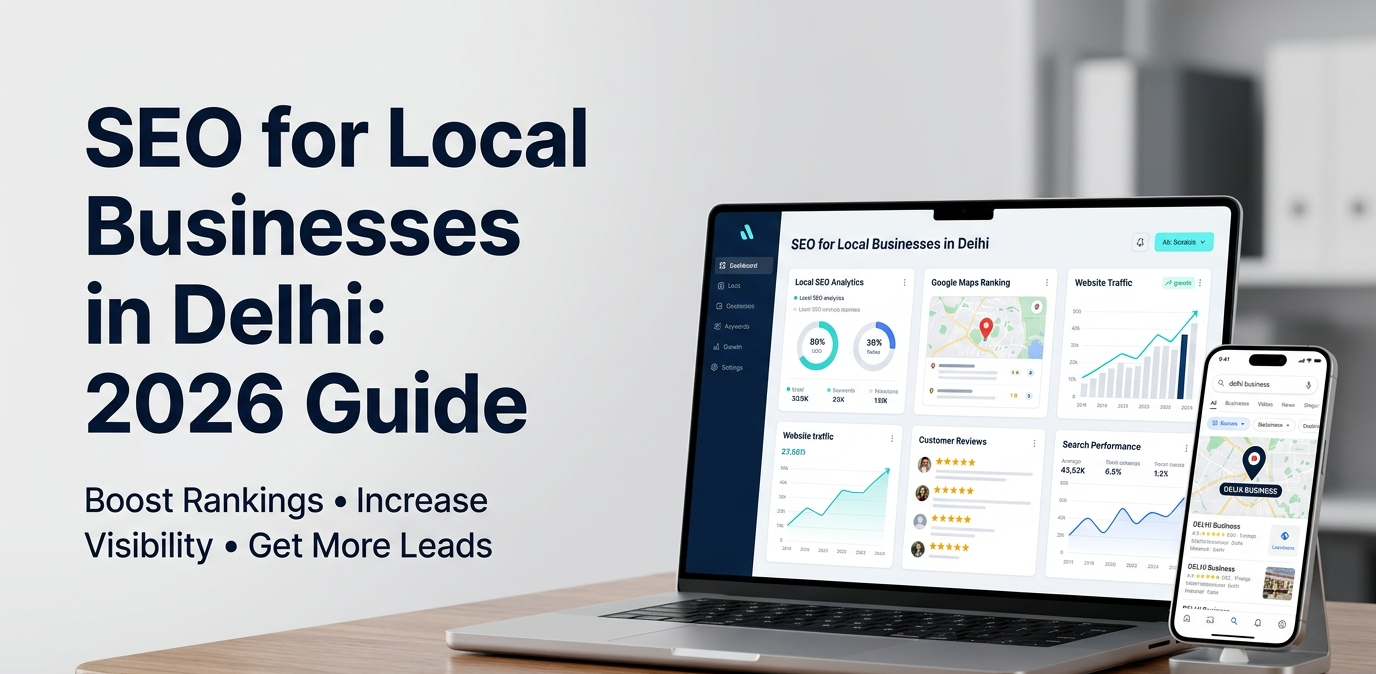
Walk into Lajpat Nagar on any weekday and you will find shops doing genuinely good work. Fair prices, experienced owners, customers who come back. Now search for that same type of shop on Google Maps. Half those businesses simply do not appear. The rest are buried so far down that no new customer ever finds them. And right at the top, collecting every call and every walk-in, sits a newer shop with less experience and probably higher prices.
That one thing separating them is SEO for local businesses in Delhi. The shop at the top worked on it. The others did not. None of this is technically difficult. It does not require a developer or a big budget. It just needs understanding what Google actually looks at and doing those specific things consistently. That is all this guide covers.
Why Local SEO in Delhi Hits Different in 2026?
Ten years ago word of mouth ran everything. Today someone needs a plumber, a salon, a CA – first thing they do is search on their phone. Not ask around. Search. And whoever shows up first gets the business.
Some numbers that put this in perspective:
- 76% of people doing a local mobile search visit a business within 24 hours, same day, not next week
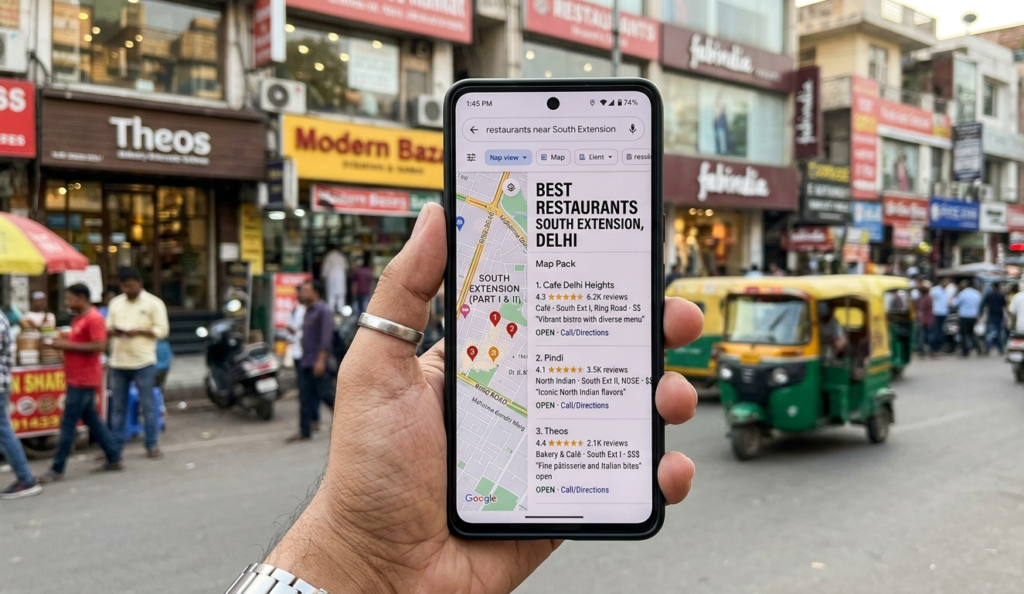
- only three businesses appear in Google’s Map Pack at the top of local search results
- those three spots take the majority of calls and walk-ins from that search
- everything below them gets almost nothing, the gap is not small
- paid ads vanish the moment budget stops, local SEO for local businesses in Delhi keeps running with zero ongoing ad spend
The businesses filling those top three spots are not always the best option available. They just understood how this works before their competitors did.
What Google Is Actually Reading for Local Search Results?
Most business owners think Google ranks their website and that is it. For local searches the reality is more layered.
Three sources Google reads at the same time:
- the Google Business Profile, the free listing that drives the entire Maps and Map Pack presence
- the actual website and whether it clearly communicates services, location, and local relevance
- how the business appears across the rest of the internet through directories, listings, and reviews
Why this matters practically:
- fixing only the website while the GBP sits unclaimed does almost nothing for local rankings
- a great GBP paired with a slow broken mobile site cancels out a lot of that work
- what the GBP says and what the website says need to match, inconsistencies confuse Google’s local systems
- all three sources need to tell the same story before SEO for local businesses in Delhi starts delivering
Step 1 – Google Business Profile, Start Here and Nowhere Else
The single highest-return action in local SEO. Not content, not backlinks, not technical audits. This.
Not claimed yours yet? That is the only task today. Everything else waits.
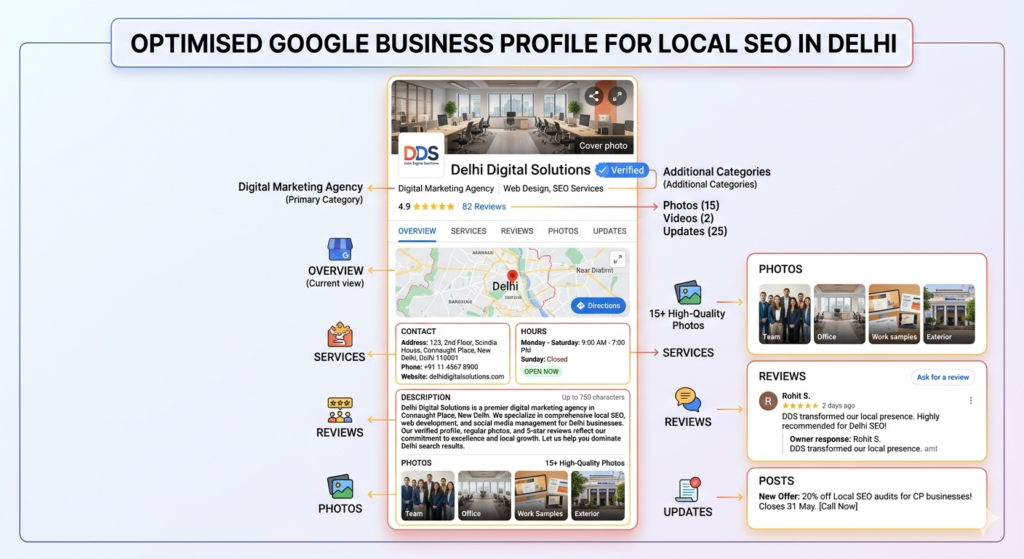
Once verified and live, what actually moves things:
- pick the most specific business category available, “Ayurvedic Clinic” beats “Health and Medical” every time
- write a description in plain human language, real services, real Delhi areas served, not a keyword list dressed up as sentences
- NAP is Name Address Phone Number and every character must match the website exactly, not roughly, “Road” and “Rd” are genuinely different things inside Google’s local systems
- photos go up regularly, not once and never again, active photo profiles get 42% more Google Maps direction requests
- two posts per month minimum, offers, updates, anything showing the business is currently operating
- every review gets a response, all of them, Google reads profile engagement as a credibility signal
For full GBP setup and ongoing management, Dizi2Connect’s hyperlocal marketing service handles everything end to end.
Step 2 – Keywords Delhi Customers Actually Type, Not How You Describe Yourself
There is always a gap between how businesses describe what they do and how customers actually search. That gap is where local keyword strategies fall apart most often.
Nobody in Rohini types “professional residential plumbing solutions.” They type “plumber near me” or “pipe burst Rohini sector 14.”
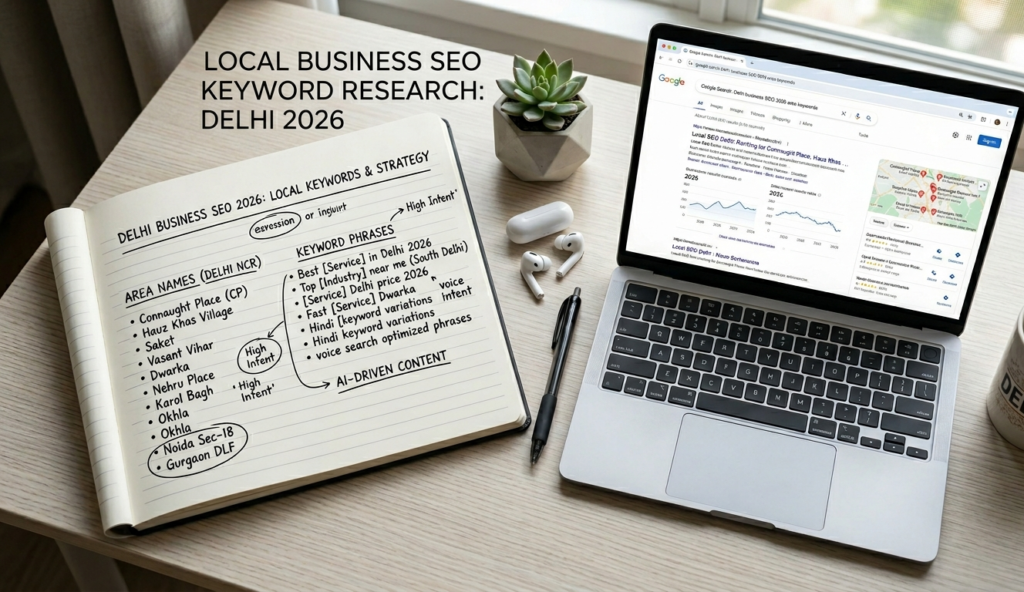
Four keyword categories that matter:
- neighbourhood plus service combinations, “salon Lajpat Nagar” or “CA Connaught Place” or “electrician Janakpuri”
- near me searches, massive volume, very winnable locally, often ignored entirely by smaller businesses
- service plus city or region phrases like “event caterer Delhi NCR” or “digital marketing Pitampura”
- problem-based searches like “how to register a company in Delhi” or “affordable braces South Delhi”
Building this list costs nothing:
- type the service into Google and read every autocomplete suggestion that appears
- check People Also Ask section in results, real questions from real searches
- scroll to Related Searches at the bottom of the results page
- Google Keyword Planner set to Delhi as geographic target, completely free to use
Place these terms naturally inside page titles, headings, service page text, meta descriptions, and GBP description. Read every sentence out loud after writing it. Anything that sounds forced needs rewriting.
Step 3 – Website Changes Most Delhi Businesses Have Never Made
A good-looking website with zero local signals is invisible for location-based searches. This describes most local business websites in Delhi right now.
Changes that matter most:
- separate page for every area served, not one generic services page mentioning ten neighbourhoods, Dwarka and Noida and Gurugram each get their own page with genuinely different local content
- NAP in the header or footer of every single page on the site, not just the contact page
- Google Maps widget on the contact page, five minutes of work, confirmed local ranking signal, most Delhi sites skip it entirely
- LocalBusiness schema markup telling Google the exact business type, hours, address, and service categories in structured data format
- mobile load speed sorted out properly because over 60% of local searches in India happen on phone and slow sites lose visitors before one word gets read
Step 4 – Citations Are Unglamorous Work That Genuinely Moves Rankings
A citation is the business name, address, and phone number on an external website. Each one is another source confirming to Google the business exists at this specific location.
Platforms every Delhi business should be listed on:
- JustDial
- Sulekha
- IndiaMART
- IndiaBizList
- Yellow Pages India
- Bing Places for Business
- Facebook Business Page
- Apple Maps
The rule that overrides everything else on this list:
- NAP must be identical on every platform, character for character, not roughly the same
- “New Delhi” on one listing and “Delhi” on another creates conflicting data Google cannot reconcile
- “Main Road” here and “Main Rd” somewhere else does the same thing
- audit existing listings first, fix every inconsistency, then add new platforms
- boring work that moves rankings in a way that surprises most people who actually do it
Step 5 – Reviews Are a Ranking Factor, Not a Nice Extra
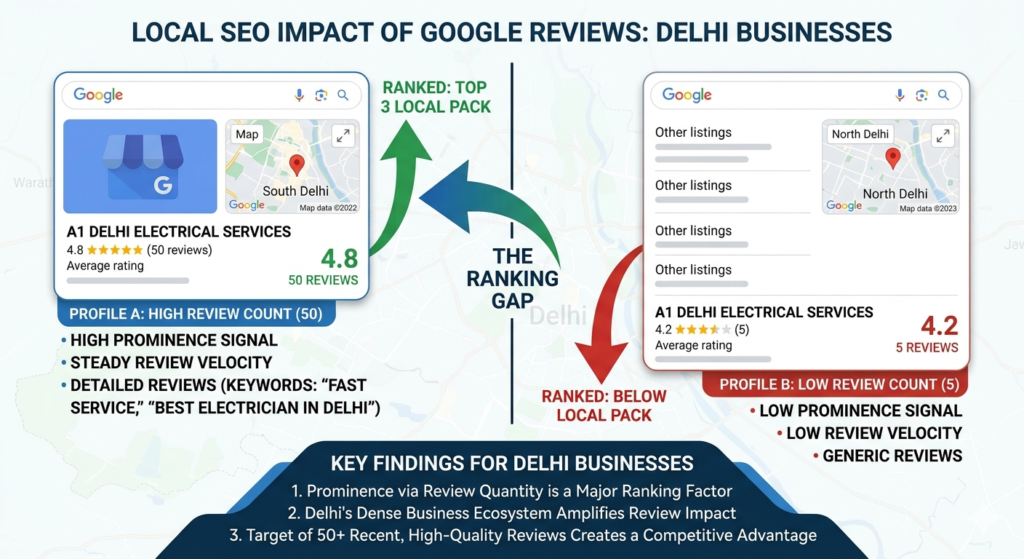
87% of people read reviews before visiting a local business. Google puts reviews in its top three Map Pack ranking signals. Both facts point to the same conclusion about what reviews actually are for SEO for local businesses in Delhi.
Getting them consistently without making it awkward:
- ask directly right after a positive experience, most satisfied customers will help if you make it fast and simple
- WhatsApp the Google review link immediately after completing a job, not the next day
- review link goes in the website footer and on every post-contact thank you page
- whoever talks to customers at the end of a transaction mentions reviews naturally as part of wrapping up
When bad reviews arrive:
- respond specifically to what actually happened
- no copy paste apologies, they look worse than silence
- one calm specific response to a bad review builds more trust than ten silent five-star ratings
Step 6 – Content Gives Google More Reasons to Show Your Business
Most Delhi local business sites have three pages. Homepage, services, contact. Google has almost nothing to evaluate for local relevance from that.
Content ideas that work for Delhi businesses:
- “What to Check Before Hiring a Plumber in Delhi”
- “How Delhi Clinic Owners Get More Patients Through Google Maps”
- “GST Registration Explained for Small Business Owners in Delhi”
- “Which Parts of Delhi NCR Make Sense for Opening a Retail Shop in 2026”
- “Finding a Reliable Event Caterer in South Delhi Without Overpaying”
Why this is worth doing even for a small local business:
- each piece is another entry point for customers to find the business through search
- person who read a useful article already partly trusts the business before seeing the services page
- that trust converts at a higher rate than cold paid traffic does
- one post a month is enough, consistency over six months is what moves things
Dizi2Connect’s content marketing service handles the full process for businesses that want this without building an internal content team.
Mistakes Actively Hurting Delhi Business Rankings Right Now
These come up on almost every local audit:
- GBP incomplete or untouched for months, Google treats sustained inactivity as a possible sign the business has closed
- slightly different NAP across platforms, kills local authority slowly with no visible warning
- website fine on desktop, broken or slow on mobile where most local Delhi searches actually happen
- reviews arriving and sitting there with no response, good ones and bad ones both unacknowledged
- chasing broad national keywords instead of specific neighbourhood terms that are actually winnable
- zero locally relevant content, leaving Google nothing to evaluate for local search relevance
Fix three this month. Rankings shift within 30 to 60 days for most Delhi markets. Fix all six and results compound hard over the months after.
Conclusion
SEO for local businesses in Delhi rewards consistent smaller actions that stack on each other over time, not one large effort done once. GBP is maintained properly. Citations are clean and consistent everywhere. Reviews coming in on an ongoing basis. Website sending real local signals. Content answering what customers already search for. Each step makes the rest stronger and together they build something competitors find hard to catch. Dizi2Connect has ranked more than 250 businesses and generated over 250,000 qualified leads across Delhi over eight years of this work. Get in touch for a free consultation to find out exactly where the business stands in local search today.
Frequently Asked Questions
How long does SEO for local businesses in Delhi take to show results?
Honestly two to three months is what most Delhi businesses see before rankings start moving noticeably. Faster if the GBP was completely empty before and slower if the niche is extremely competitive. Nothing happens overnight but things do move.
Does local SEO in Delhi need a big budget?
GBP, citations, basic website fixes – none of that costs money, just time. An agency adds a monthly cost but the enquiries from consistent organic rankings usually beat what paid ads deliver for the same spend. For most local Delhi businesses the math works out clearly in favour of SEO over time.
What makes local SEO different from regular SEO?
Regular SEO is about ranking broadly for wide topics at national scale. Local SEO is specifically about showing up when someone three streets away searches for what you sell right now. Different signals entirely. Proximity matters, GBP matters, citations matter – none of those are relevant in regular SEO.
How much do Google reviews actually affect rankings?
More than most people realise. Google officially includes reviews in its top three local ranking factors. A business with 50 genuine reviews will show up above a competitor with 5 in the same area in most cases, even if that competitor has a better website. Stars alone are not enough, volume and recency both matter.
Can a small Delhi shop outrank bigger brands locally?
Regularly, yes. Big brands do national SEO and mostly ignore neighbourhood-level signals. An active GBP, consistent local citations, and genuine reviews from real local customers will beat a large brand with a neglected local presence more often than people expect. It happens every week across Delhi.
Do I need a website for local SEO to work?
GBP alone does give some visibility, especially for branded searches. But without a website Google has very little extra data to evaluate and customers have nowhere to land when they want more information. Even a simple five-page site optimised properly adds a lot to what the GBP alone can do.
Tags: