

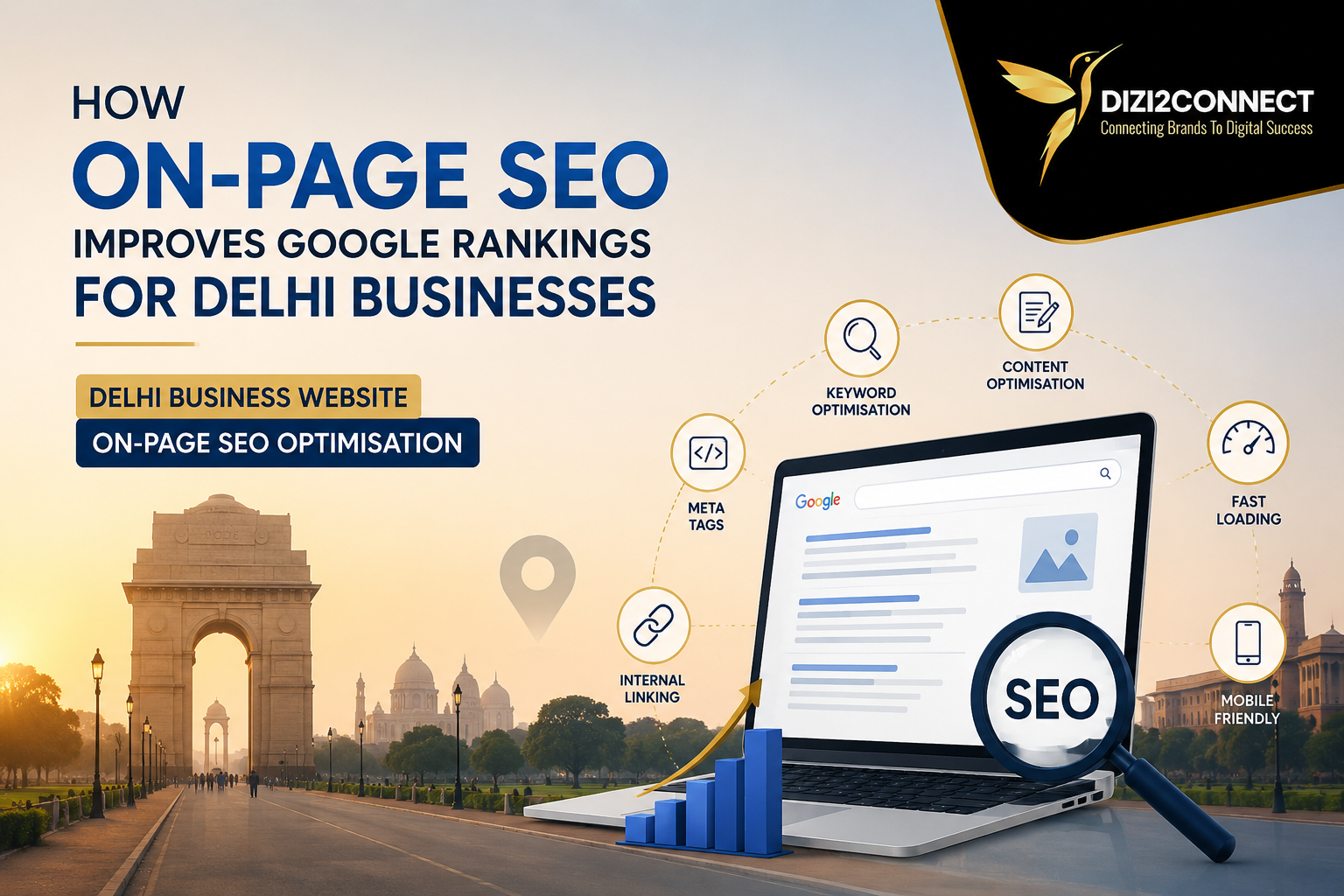
Businesses in Delhi operate in one of India’s most competitive digital marketplaces. Whether companies provide local services, professional consulting, healthcare solutions, educational services, or e-commerce products, appearing on the first page of Google can dramatically increase inquiries, sales, and brand recognition. This is where understanding How On-Page SEO Boosts Google Rankings for Delhi Businesses becomes essential for sustainable online growth.
On-page SEO refers to the optimization techniques applied directly to a website to help search engines understand content relevance and quality. Unlike paid advertising that stops generating traffic once budgets run out, on-page optimization builds long-term visibility and authority. Proper implementation helps businesses rank higher, attract qualified visitors, and improve conversion rates from organic search traffic.
What Is On-Page SEO and Why Does It Matter for Delhi Businesses?
On-page SEO refers to the process of optimizing individual pages of a website to improve their visibility in search engine results and provide a better experience for users. It includes optimizing elements such as page titles, headings, content, images, URLs, internal links, and meta descriptions to help search engines understand the relevance and quality of a webpage. For businesses operating in Delhi’s highly competitive digital market, effective on-page SEO ensures that their websites appear in front of potential customers searching for relevant products or services online.
Key Reasons On-Page SEO Matters for Delhi Businesses
- Improves Search Engine Visibility: Proper optimization helps Google understand the purpose of your pages, increasing the likelihood of appearing in relevant search results for Delhi-based customers.
- Targets Local Customers More Effectively: Using location-specific keywords and local content helps businesses attract users searching for products and services in Delhi and nearby areas.
- Enhances User Experience: Fast-loading pages, clear navigation, and mobile-friendly designs encourage visitors to stay longer and engage more with your website.
- Increases Organic Website Traffic: Higher rankings for relevant keywords lead to a steady flow of visitors without the ongoing costs associated with paid advertising campaigns.
- Builds Brand Authority and Trust: Websites that consistently appear in top search results are often viewed as more credible and trustworthy by potential customers.
- Generates More Leads and Conversions: By attracting users actively searching for solutions, on-page SEO helps convert website visitors into inquiries, customers, and long-term clients.
How On-Page SEO Boosts Google Rankings for Delhi Businesses Through Better Keyword Targeting?
Keyword optimization remains one of the strongest ranking signals in modern SEO strategies. Search engines analyze page content to determine whether it matches user intent and search queries. Strategic placement of relevant keywords helps search engines understand the subject and purpose of a page.
Delhi businesses benefit significantly from local keyword optimization because customer searches frequently include geographical modifiers such as “near me,” “Delhi,” or specific locality names. Using primary keywords alongside secondary and semantic keywords improves topical relevance and increases opportunities to rank for multiple related search queries.
Important Keywords Delhi Businesses Should Target
- Local SEO Keywords: Use Delhi-specific search terms to attract customers looking for nearby businesses and services.
- Commercial Intent Keywords: Target users who are ready to inquire, compare options, or make a purchase decision.
- Long-Tail Keywords: Longer and more specific keywords often face less competition and generate better conversions.
- Semantic Keywords: Related keywords help search engines understand the overall topic and context of your content.
- Service-Specific Keywords: Industry-focused search terms attract highly relevant and qualified website visitors.
- Location Modifiers: Including localities and neighborhood names helps improve visibility in local search results.
How Does Content Optimization Boosts Search Ranking
Content quality is one of the most influential ranking factors in Google’s algorithm. Websites that provide detailed, relevant, and helpful information are more likely to satisfy user intent and earn higher positions in search results.
Optimized content includes strategic keyword placement, comprehensive topic coverage, proper heading structures, and readable formatting. Businesses in Delhi can establish authority in their industries by publishing valuable content that addresses customer questions, concerns, and decision-making processes.
Essential Content Optimisation Techniques
- Keyword Placement: Include primary and secondary keywords naturally in headings, subheadings, and body content to improve relevance.
- Search Intent Matching: Create content that answers users’ questions and provides the information they are looking for.
- Topic Depth: Cover topics comprehensively to demonstrate expertise and provide greater value to readers.
- Content Freshness: Update content regularly to keep information accurate and relevant for search engines and users.
- Readability Improvements: Use short paragraphs, headings, and simple formatting to make content easier to read.
- User Engagement Optimization: Valuable and informative content encourages visitors to stay longer and explore more pages.
How On-Page SEO Boosts Google Rankings for Delhi Businesses Through Title Tags and Meta Descriptions?
Title tags are among the first elements search engines evaluate when determining page relevance. A well-written title helps search engines understand content while encouraging users to click on search results. Effective title tags include target keywords while remaining engaging and descriptive.
Meta descriptions do not directly influence rankings but significantly affect click-through rates. Higher click-through rates indicate relevance and user satisfaction, which can indirectly support stronger ranking performance over time. Businesses in Delhi can improve visibility by creating compelling metadata tailored to local audiences.
Best Practices for SEO Metadata
- Include Target Keywords Naturally: Use primary and secondary keywords naturally in titles and descriptions without overusing them.
- Keep Titles Concise: Write titles within recommended character limits to ensure they display properly in search results.
- Write Compelling Descriptions: Create meta descriptions that encourage users to click and visit your website.
- Add Location References: Include Delhi or relevant service areas when targeting local customers and searches.
- Create Unique Metadata: Every important page should have its own title and meta description to avoid duplication.
- Focus on User Intent: Write metadata for users first while ensuring it remains optimized for search engines.
Why Are Heading Tags Important for SEO Success?
Heading tags play a crucial role in organizing website content into clear and logical sections, making it easier for both users and search engines to understand the information presented on a page. The proper use of H1, H2, and H3 tags creates a structured hierarchy that guides readers through the content while helping search engines identify the main topics and supporting subtopics. This structure improves content readability and ensures that important information receives the attention it deserves.
Key Benefits of Using Heading Tags for SEO
- Creates a Clear Content Structure: Heading tags divide content into organized sections, making it easier for users to scan and understand information quickly.
- Helps Search Engines Understand Content: Search engines analyze headings to determine the main topics of a page and how different sections relate to one another.
- Improves User Experience and Readability: Well-structured content reduces confusion and allows visitors to find the information they need without unnecessary effort.
- Provides Additional Keyword Placement Opportunities: Including relevant keywords naturally within headings strengthens topical relevance without leading to keyword stuffing.
- Increases Featured Snippet Potential: Properly formatted headings and concise answers improve the chances of appearing in Google’s featured snippets and answer boxes.
- Supports Better Engagement Metrics: Users are more likely to stay on pages with clear organization, which can contribute to lower bounce rates and longer session durations.
How Does Internal Linking Improve Rankings?
Internal links connect related pages within a website and help distribute authority across important pages. Search engines use internal links to discover new content, understand page relationships, and identify priority pages within a website structure.
Businesses in Delhi can guide users toward service pages, contact forms, case studies, and blog resources through strategic internal linking. This improves engagement metrics while strengthening the SEO value of key commercial pages.
Benefits of Internal Linking
- Improves Website Crawling Efficiency: Internal links help search engines discover and index important pages more effectively.
- Distributes Authority to Important Pages: Linking to key pages passes SEO value and strengthens their ranking potential.
- Increases User Engagement: Relevant internal links encourage visitors to explore more content on the website.
- Reduces Bounce Rates: Users are more likely to stay longer when they can easily find related information.
- Supports Topic Clusters and Content Relevance: Internal linking helps search engines understand relationships between different topics.
- Strengthens Website Architecture: A strong linking structure makes websites easier to scale and manage as they grow.
How On-Page SEO Boosts Google Rankings for Delhi Businesses Through User Experience?
Google increasingly evaluates websites based on user experience signals. Fast-loading websites, mobile responsiveness, intuitive navigation, and accessible content contribute to stronger search performance and better user satisfaction.
Delhi businesses often receive traffic from mobile users searching while commuting, traveling, or comparing options locally. Websites that provide seamless mobile experiences are more likely to convert visitors into customers while benefiting from improved ranking signals.
User Experience Factors That Influence Rankings
- Mobile Responsiveness: Websites should work smoothly on mobiles, tablets, and desktops. Google gives preference to mobile-friendly websites in search results.
- Fast Loading Speeds: Slow websites frustrate users and increase bounce rates. Faster pages improve user satisfaction and SEO performance.
- Clear Navigation: Visitors should find information quickly and easily. Simple menus and internal links improve the browsing experience.
- Accessible Design: Accessible websites are easier for all users to use and navigate. They also help search engines understand content better.
- Visual Stability: Page elements should not move unexpectedly while loading. Stable layouts create a smoother user experience.
- Interactive Elements: Responsive buttons, forms, and menus encourage engagement. Better interaction often leads to improved conversions and rankings.
Why Is Page Speed Important for Local Businesses in Delhi?
Page speed has become one of the most important factors influencing both search engine rankings and customer experience. Modern internet users expect websites to load almost instantly, and even a delay of a few seconds can cause visitors to leave a website before interacting with its content. Google considers website speed an important ranking signal because faster websites generally provide a better user experience and higher levels of customer satisfaction.
Factors That Make Page Speed Important for Delhi Businesses
- Improves Search Engine Rankings: Google uses page speed as a ranking factor because faster websites provide a better experience for users and encourage engagement.
- Reduces Bounce Rates: Visitors are more likely to stay on a website that loads quickly rather than waiting for slow pages to appear.
- Increases Conversion Opportunities: Faster websites make it easier for users to complete inquiries, purchases, and bookings without frustration or delays.
- Enhances Mobile User Experience: A large percentage of Delhi customers search on mobile devices, making speed optimization essential for accessibility and usability.
- Supports Better Core Web Vitals Scores: Optimized loading times improve important performance metrics that Google uses to evaluate website quality.
- Provides a Competitive Advantage: Businesses with faster websites can outperform slower competitors by delivering a smoother and more reliable browsing experience.
How Image Optimization Support Better Rankings?
Images play an important role in improving the visual appeal of a website and keeping visitors engaged with the content. High-quality visuals can make articles more informative, enhance product presentations, and improve the overall user experience. However, if images are not properly optimized, they can significantly slow down page loading times, negatively affecting both user satisfaction and search engine rankings. This makes image optimization an essential component of any successful on-page SEO strategy.
Image SEO Best Practices
- Compress Images to Improve Loading Speed: Large image files can slow down websites considerably, so compressing images helps pages load faster and improves user experience.
- Use Descriptive Filenames That Explain Image Content: Renaming files with meaningful descriptions helps search engines understand the subject of an image before indexing it.
- Add Keyword-Rich Alt Text Naturally: Well-written alt text improves accessibility for users with screen readers while providing additional context for search engines.
- Choose Modern File Formats for Better Performance: Formats such as WebP often provide high image quality with smaller file sizes compared to traditional formats.
- Implement Lazy Loading Where Appropriate: Lazy loading delays the loading of off-screen images until users scroll down, improving initial page speed performance.
- Optimize Image Dimensions for Different Devices: Responsive image sizes ensure that desktop, tablet, and mobile users receive appropriately sized visuals for faster loading times.
How Does Schema Markup Help Delhi Businesses Rank Higher?
Schema markup is a form of structured data that helps search engines understand the content and purpose of a webpage more accurately. By adding specific code to a website, businesses can provide additional information about their services, products, reviews, business hours, locations, and contact details. This extra context allows search engines to display richer and more informative search results, making it easier for users to find relevant information before they even visit the website.
Key Ways Schema Markup Helps Delhi Businesses Rank Higher
- Improves Search Engine Understanding: Structured data provides clear information about your business, helping search engines interpret website content more accurately and efficiently.
- Enhances Search Result Appearance: Schema markup enables rich results such as ratings, FAQs, prices, and business details that attract more user attention.
- Increases Click-Through Rates: More informative search listings encourage users to click on your website instead of competing results on the page.
- Strengthens Local SEO Performance: Local business schema helps Google understand your location, contact information, and service areas within Delhi.
- Supports Voice Search Optimization: Structured data makes it easier for search engines and voice assistants to retrieve accurate business information quickly.
- Creates a Competitive Advantage: Businesses using schema markup often gain more visibility and engagement than competitors relying only on standard search listings.
Can On-Page SEO Help Businesses Rank in Local Search Results?
Local search optimization has become increasingly important as consumers rely on Google to find nearby businesses, products, and services. Whether users search for a restaurant, healthcare provider, educational institution, or professional service, search engines prioritize businesses that demonstrate strong local relevance. This is one of the key ways How On-Page SEO Improves Google Rankings for Delhi Businesses, as optimized pages help Google understand where a business operates and which audience it serves.
Local SEO Elements to Optimise
- Location-Specific Keywords Throughout Important Pages: Include relevant Delhi-based keywords naturally within service pages, blog content, headings, and metadata to improve local search relevance.
- Consistent Business Information Across the Website: Ensure your business name, address, and phone number remain accurate and consistent on every important page of the website.
- Local Landing Pages for Different Service Areas: Creating dedicated pages for specific areas or neighborhoods in Delhi helps target customers searching within those locations.
- Customer Testimonials from Local Clients: Reviews and testimonials from Delhi customers improve trust while reinforcing local relevance for search engines and users.
- Structured Local Content Addressing Regional Needs: Publishing content related to local events, trends, and customer concerns demonstrates expertise within the Delhi market.
- Location Schema Markup for Better Understanding: Local business schema helps search engines understand your service areas, contact details, and business information more effectively.
How On-Page SEO Boosts Google Rankings for Delhi Businesses Compared to Paid Advertising?
Understanding How On-Page SEO Boosts Google Rankings for Delhi Businesses become even more important when comparing them with paid advertising strategies. Paid advertisements can place a business at the top of search results almost instantly, but the visibility disappears as soon as the advertising budget is exhausted. On-page SEO, on the other hand, focuses on improving website quality, content relevance, user experience, and technical performance to achieve sustainable organic rankings that continue generating traffic over time.
Key Differences Between On-Page SEO and Paid Advertising
- Provides Long-Term Traffic Growth: On-page SEO continues attracting visitors long after optimization work has been completed, unlike paid campaigns that stop immediately when budgets end.
- Builds Greater Customer Trust: Many users trust organic search results more than advertisements because they see rankings as a sign of credibility and expertise.
- Delivers Better Return on Investment Over Time: Although SEO requires time and effort, the long-term cost per lead often becomes lower than ongoing advertising expenses.
- Improves Overall Website Quality: On-page SEO enhances content, page speed, navigation, and usability, creating benefits that extend beyond search rankings alone.
- Supports Multiple Keyword Rankings: A single optimized page can rank for dozens of related keywords and search queries, increasing visibility across a wider audience.
- Works Alongside Other Marketing Channels: Combining SEO with paid advertising, social media marketing, and content marketing often creates the strongest and most sustainable growth strategy.
Common On-Page SEO Mistakes Delhi Businesses Should Avoid
Many businesses in Delhi invest in SEO but fail to achieve the desired results because of common on-page optimization mistakes. These errors can reduce search visibility, negatively impact user experience, and make it difficult for search engines to understand website content. Even high-quality products or services may struggle to rank if the website suffers from technical issues or poor optimization practices.
Common On-Page SEO Mistakes to Avoid
- Keyword Stuffing in Content: Repeating keywords excessively makes content difficult to read and can lead to search engine penalties for unnatural optimization practices.
- Missing or Duplicate Title Tags and Meta Descriptions: Pages without unique metadata make it harder for search engines and users to understand the purpose of the content.
- Poor Heading Structure: Incorrect use of H1, H2, and H3 tags creates confusion for both visitors and search engines when interpreting page hierarchy.
- Ignoring mobile optimization: Since a large percentage of users browse on smartphones, a poor mobile experience can lead to higher bounce rates and lower rankings.
- Slow Page Loading Speeds: Large images, unnecessary scripts, and poor hosting can slow down websites and negatively affect user satisfaction and SEO performance.
- Broken Internal Links and Missing Alt Text: Broken links create navigation issues, while missing image alt text reduces accessibility and limits image search visibility.
Measuring the Success of On-Page SEO Efforts
Measuring the success of on-page SEO efforts is essential for understanding whether optimization strategies are delivering the desired results. While higher rankings are an important indicator, businesses should also monitor other performance metrics such as organic traffic, user engagement, conversion rates, and click-through rates. Tracking multiple indicators provides a clearer picture of how well a website is performing and identifies areas that require further improvement.
Key Metrics for Measuring On-Page SEO Success
- Organic Traffic Growth: An increase in visitors arriving through unpaid search results indicates that your website is becoming more visible for relevant keywords.
- Keyword Ranking Improvements: Monitoring keyword positions helps businesses understand which optimization efforts are improving search visibility over time.
- Click-Through Rate (CTR): Higher click-through rates suggest that title tags and meta descriptions are attracting users from search engine results pages.
- Bounce Rate and User Engagement: Lower bounce rates and longer session durations often indicate that visitors find the content useful and relevant to their needs.
- Conversion Rate Performance: Tracking inquiries, purchases, bookings, or form submissions helps determine whether SEO traffic is contributing to business growth.
- Core Web Vitals and Page Experience Scores: Monitoring technical performance metrics ensures that the website continues to meet Google’s standards for user experience and usability.
Conclusion
Understanding How On-Page SEO Improves Google Rankings for Delhi Businesses is essential for companies looking to strengthen their online presence in an increasingly competitive market. Effective on-page SEO goes beyond simply adding keywords to a webpage. It involves optimizing content quality, heading structures, title tags, meta descriptions, internal links, images, page speed, and mobile usability to create a better experience for both users and search engines.
For Delhi businesses, these improvements can lead to higher search rankings, increased organic traffic, better engagement metrics, and more qualified leads. Unlike paid advertising, which stops delivering results when budgets run out, on-page SEO builds long-term digital assets that continue generating visibility and business opportunities over time.
As local competition continues to grow, businesses that invest in consistent on-page optimization will be better positioned to attract customers, improve conversions, and achieve sustainable online growth.
Explore Our Recent Posts
- Why Responsive Websites Matter for Delhi Businesses
- How Website Design Impacts Business Growth in Delhi
- Why Website Maintenance Is Important for Delhi Business Websites
- Why E-Commerce SEO Matters for Online Stores in Delhi
- Why Technical SEO Is Important for Delhi Business Websites
Frequently Asked Questions
1. How long does on-page SEO take to improve rankings?
Most businesses begin noticing improvements within three to six months, depending on competition levels and website authority. Highly competitive industries may require longer timelines to achieve substantial growth. Consistency and ongoing optimization are essential for sustainable results.
2. Is on-page SEO enough to rank a business website?
On-page SEO forms the foundation of every successful SEO strategy, but off-page factors also contribute to rankings. Backlinks, local citations, and brand authority complement on-page efforts. Combining both approaches produces the strongest results.
3. Why is local SEO important for Delhi businesses?
Local SEO helps businesses appear in geographically relevant searches made by nearby customers. Since many users include location intent in searches, local optimization increases visibility among high-intent audiences. It also improves opportunities to appear in map listings.
4. How often should on-page SEO be updated?
SEO is an ongoing process rather than a one-time task. Businesses should review important pages regularly to ensure content remains accurate and competitive. Quarterly audits are generally recommended for most websites.
5. Does website speed affect Google rankings?
Yes, website speed is an important ranking factor because it influences user experience and engagement. Slow websites often experience higher bounce rates and lower conversions. Improving speed benefits both SEO and business performance.
6. Which is more important: content quality or keywords?
Both are essential and work together to improve rankings. Keywords help search engines understand topics, while quality content satisfies user intent and encourages engagement. The most successful SEO strategies balance both elements effectively.
Tags: