

Businesses in Delhi compete in one of India’s most crowded digital markets. Whether you run a local shop, law firm, educational institute, healthcare clinic, restaurant, or technology company, appearing on Google’s first page has become essential for attracting customers. This is exactly how blogging helps Delhi businesses increase organic traffic by creating relevant, keyword-focused content that answers users’ questions while improving search visibility.
Understanding how blogging helps Delhi businesses increase organic traffic is no longer optional for brands that want sustainable online growth. Unlike paid advertisements that stop producing results once the budget ends, SEO blogs continue generating visitors, leads, and brand awareness for months or even years. A well-planned blogging strategy builds trust, authority, and consistent search engine visibility.
What Does Business Blogging Mean for SEO?
Business blogging refers to publishing informative, valuable, and keyword-optimized articles on your company website. Instead of focusing only on products or services, blogs educate readers, solve problems, answer common questions, and establish expertise within your industry. Search engines reward websites that consistently publish useful content.
For Delhi businesses, blogging also supports local SEO by targeting location-specific keywords that customers actually search for. Whether someone searches for nearby services, expert advice, or buying guides, well-written blog posts increase your chances of appearing in Google’s search results while attracting highly relevant visitors.
How Blogging Helps Delhi Businesses Increase Organic Traffic?
Understanding how blogging helps Delhi businesses increase organic traffic starts with recognizing the role of valuable content in modern SEO. Every well-written blog post gives your website another opportunity to rank for relevant keywords, answer customer questions, and attract users searching for information online. Unlike paid advertising, blogs continue generating visitors long after they are published, making them a sustainable marketing asset.
Ways Blogging Helps Delhi Businesses Increase Organic Traffic
- Targets Relevant Search Keywords: Every blog can focus on specific primary, secondary, and long-tail keywords that potential customers are searching for. This increases your chances of appearing in Google’s organic search results.
- Improves Local SEO Visibility: Blogging allows businesses to naturally include Delhi-specific keywords, locations, and local topics. This helps search engines connect your website with users searching for services in Delhi.
- Builds Topical Authority: Publishing multiple articles around your industry demonstrates expertise to both users and search engines. As your content library grows, Google is more likely to view your website as an authoritative resource.
- Increases Internal Linking Opportunities: New blog posts can link to related service pages and older articles, helping visitors navigate your website more easily. Internal linking also distributes SEO value across important pages.
- Generates Long-Term Organic Traffic: High-quality blog posts continue attracting visitors for months or even years after publication. Unlike paid advertisements, they keep delivering traffic without requiring ongoing advertising costs.
- Encourages User Engagement and Conversions: Helpful blogs answer customer questions and build trust before a purchase decision is made. Engaged readers are more likely to contact your business, subscribe to updates, or become paying customers.
Why Is Blogging Important for Local SEO in Delhi?
For businesses looking to understand how blogging helps Delhi businesses increase organic traffic, local SEO is one of the biggest advantages. Well-optimized blogs support Google Business Profile visibility, improve keyword relevance, and build trust with both search engines and potential customers. Over time, consistent blogging helps establish your brand as a reliable local authority while driving qualified organic traffic.
Benefits of Blogging for Local SEO in Delhi
- Targets Location-Based Keywords: Blogs allow you to naturally include keywords such as “Delhi,” local areas, and nearby locations. This improves your chances of ranking for searches made by local customers.
- Answers Local Customer Queries: Publishing content that addresses common questions from Delhi audiences helps match user search intent. Google rewards websites that provide useful and relevant local information.
- Supports Google Business Profile Rankings: Fresh blog content signals that your website is active and regularly updated. This can complement your Google Business Profile and strengthen your local search presence.
- Builds Trust Within the Local Community: Sharing local insights, industry updates, and helpful advice positions your business as an expert in the Delhi market. Trustworthy content encourages users to return to your website.
- Creates More Opportunities for Backlinks: Valuable local content is more likely to be referenced by regional websites, blogs, and directories. These quality backlinks improve your website’s authority and SEO performance.
- Drives Qualified Organic Traffic: Local blog posts attract visitors who are actively searching for products or services in Delhi. This results in more relevant traffic and increases the likelihood of generating inquiries and conversions.
How Often Should Delhi Businesses Publish Blog Posts?
Regular updates signal to search engines that your website is active, relevant, and continuously providing value to users. If your business operates in a highly competitive market, publishing weekly blogs can help you target more keywords and stay ahead of competitors. A consistent content schedule not only supports how blogging helps Delhi businesses increase organic traffic but also builds topical authority, improves local SEO, and keeps your audience engaged with fresh, informative content.
Best Practices for Blog Publishing Frequency
- Maintain a Consistent Schedule: Whether you publish weekly or biweekly, stick to a regular schedule. Consistency helps search engines crawl your website more frequently and keeps readers engaged.
- Prioritise Quality Over Quantity: A well-researched, informative blog provides far more SEO value than several poorly written articles. Focus on creating content that genuinely answers your audience’s questions.
- Publish Based on Industry Competition: Businesses in competitive sectors like healthcare, real estate, education, and digital marketing may benefit from publishing more frequently. More quality content creates additional ranking opportunities.
- Plan Content with a Content Calendar: Organizing topics in advance ensures a steady flow of relevant blog posts throughout the year. It also helps you cover seasonal trends and important local events.
- Update Older Blog Posts Regularly: Refreshing existing articles with new information, keywords, and statistics keeps them relevant. Updated content can improve rankings and attract additional organic traffic.
- Track Performance and Adjust Frequency: Use tools like Google Analytics and Google Search Console to measure blog performance. Analyzing traffic and rankings helps determine the publishing frequency that works best for your business.
What Type of Blog Content Brings the Most Organic Traffic?
Not every blog post delivers the same SEO results. The most successful blogs are those that provide valuable information, answer users’ questions, and match their search intent. By creating a variety of high-quality content formats, businesses can target different keywords, engage a wider audience, and better understand how blogging helps Delhi businesses increase organic traffic through consistent search visibility.
Educational Guides
- Answer Customer Questions: Educational guides provide detailed explanations that help users understand complex topics. This improves user satisfaction and increases the chances of ranking for informational searches.
- Build Industry Authority: Publishing comprehensive guides demonstrates your expertise and establishes your business as a trusted source of information. Greater authority can lead to improved search engine rankings.
- Earn Quality Backlinks: Valuable educational content is more likely to be referenced by other websites and industry blogs. These backlinks strengthen domain authority and boost long-term SEO performance.
How-To Articles
- Target Long-Tail Keywords: Step-by-step tutorials naturally rank for detailed search queries with lower competition. This helps attract highly targeted visitors looking for practical solutions.
- Provide Actionable Value: Readers appreciate content that offers clear instructions and solves real problems. Useful articles encourage longer page visits and repeat website traffic.
- Generate Evergreen Traffic: Well-written how-to guides remain relevant for years with occasional updates. They continue attracting organic visitors without additional advertising costs.
Local Industry Updates
- Cover Delhi-Specific Topics: Writing about local business news, regulations, events, or trends increases the relevance of your content for Delhi audiences. This strengthens local SEO performance.
- Improve Community Engagement: Localized content connects your business with nearby customers and demonstrates awareness of the regional market. Engaged readers are more likely to trust your brand.
- Increase Local Search Visibility: Including Delhi-related keywords and location-specific information helps search engines associate your website with local searches. This improves your chances of appearing in location-based search results.
How Does Keyword Research Improve Blog Performance?
For businesses aiming to understand how blogging helps Delhi businesses increase organic traffic, effective keyword research makes content more discoverable and relevant. By targeting a mix of primary keywords, long-tail keywords, and related LSI terms, blogs can rank for multiple search queries, increase organic visibility, and attract users who are actively looking for products, services, or information.
Ways Keyword Research Improves Blog Performance
- Identifies High-Value Search Terms: Keyword research reveals the exact phrases your potential customers are searching for on Google. This helps you create content that matches real user demand and increases ranking opportunities.
- Targets User Search Intent: Understanding whether users want information, comparisons, or services allows you to create content that satisfies their needs. Matching search intent improves engagement and reduces bounce rates.
- Improves Organic Search Rankings: Using relevant primary, secondary, and LSI keywords naturally throughout your blog helps search engines understand your content. This increases the likelihood of ranking for multiple related searches.
- Finds Long-Tail Keyword Opportunities: Long-tail keywords often have lower competition and higher conversion potential. Targeting these phrases helps businesses attract highly qualified visitors with specific needs.
- Supports Better Content Planning: Keyword research provides ideas for future blog topics based on customer interests and industry trends. A strategic content plan ensures continuous growth in organic traffic over time.
- Enhances Local SEO Performance: Including location-specific keywords such as Delhi and nearby areas improves your visibility in local search results. This helps attract customers who are actively searching for businesses within your target market.
Can Blogging Increase Website Authority?
Yes, blogging is one of the most effective ways to increase website authority because it allows businesses to consistently publish valuable, informative, and industry-specific content. Search engines favor websites that regularly demonstrate expertise, relevance, and trustworthiness through high-quality articles. As your blog library grows, Google gains a better understanding of your niche, improving your chances of ranking for a wider range of search queries.
For businesses aiming to understand how blogging helps Delhi businesses increase organic traffic, building website authority is a major advantage. Well-researched blog posts attract backlinks, encourage longer user engagement, strengthen internal linking, and establish your brand as a reliable source of information. Over time, increased authority leads to higher search rankings, greater organic visibility, and more qualified website traffic.
How Does Blogging Support Content Marketing?
Blogging is one of the most effective pillars of a successful content marketing strategy because it provides valuable information that educates, informs, and engages potential customers. Every blog post gives businesses an opportunity to answer common questions, showcase expertise, and build trust with their audience while improving search engine visibility. High-quality blog content also serves as a long-term asset that continues attracting visitors through organic search.
Ways Blogging Strengthens Content Marketing
- Creates Valuable Evergreen Content: Well-written blog posts remain useful for months or even years, continuing to attract visitors through search engines. Evergreen content provides lasting value and supports long-term marketing goals.
- Supports Social Media Marketing: Each blog can be repurposed into social media posts, carousels, infographics, or short videos. This extends the reach of your content and drives more users back to your website.
- Builds Brand Authority and Trust: Publishing informative and well-researched articles demonstrates your expertise within your industry. Customers are more likely to trust businesses that consistently provide helpful content.
- Improves Lead Generation: Blogs attract users who are actively searching for solutions to their problems. Strategic calls-to-action within blog posts encourage readers to inquire about your products or services.
- Enhances Email Marketing Campaigns: Sharing blog articles through newsletters keeps subscribers informed and engaged. It also encourages repeat website visits and strengthens customer relationships over time.
- Increases Organic Website Traffic: SEO-optimized blogs target relevant keywords that help your website rank higher on Google. Higher visibility leads to more organic visitors, supporting long-term business growth without relying solely on paid advertising.
Does Blogging Help Generate Qualified Leads?
Yes, blogging is an effective way to generate qualified leads because it attracts people who are actively searching for information, products, or services related to your business. Instead of reaching a broad audience through advertisements, SEO-optimized blog posts connect with users who already have a genuine interest in your industry. This targeted approach increases the likelihood of converting website visitors into potential customers.
Understanding how blogging helps Delhi businesses increase organic traffic also explains why blogging supports lead generation. Informative content builds trust, answers customer questions, and guides readers through the buying journey. When combined with clear calls-to-action, contact forms, and relevant service pages, blogs can turn organic traffic into valuable business inquiries and long-term customers.
Common Blogging Mistakes That Reduce Organic Traffic
Even the most informative blog posts may fail to perform well if they overlook essential SEO practices. Many businesses invest time in creating content but make common mistakes that prevent their articles from ranking on Google. Avoiding these errors is just as important as publishing high-quality content if you want to maximize the benefits of how blogging helps Delhi businesses increase organic traffic.
Publishing Without Keyword Research
- Misses Valuable Search Opportunities: Writing without researching keywords often means targeting topics that few people search for. This limits your chances of attracting organic traffic.
- Creates Content with Low Visibility: Without relevant keywords, search engines struggle to understand the focus of your blog. As a result, your content may not rank for important search queries.
- Reduces Return on Content Investment: Time and effort spent creating articles are less effective if the content does not reach the intended audience. Keyword research helps maximize every blog’s SEO potential.
Ignoring Search Intent
- Fails to Meet User Expectations: Users expect content that directly answers their questions or solves their problems. Blogs that ignore search intent often experience higher bounce rates.
- Lowers Engagement and Rankings: When visitors cannot find the information they need, they leave quickly. Poor engagement signals can negatively affect search engine rankings.
- Misses Conversion Opportunities: Matching informational, commercial, or transactional intent helps guide users through the buying journey. Relevant content is more likely to generate inquiries and leads.
Poor Internal Linking
- Weakens Website Navigation: Without internal links, visitors may struggle to discover related articles or service pages. This can reduce the time users spend on your website.
- Limits SEO Value Distribution: Internal links help pass authority between pages and improve the visibility of important content. Poor linking prevents search engines from understanding your website structure.
- Reduces Crawl Efficiency: Search engine bots rely on internal links to discover and index pages. A lack of linking can result in slower indexing and missed ranking opportunities.
Inconsistent Publishing
- Signals an Inactive Website: Long gaps between blog posts may indicate to search engines that your website is not regularly maintained. Consistent publishing helps maintain SEO momentum.
- Slows Organic Traffic Growth: Publishing content irregularly creates fewer opportunities to rank for new keywords. A steady content schedule supports continuous traffic growth over time.
- Makes Audience Engagement Difficult: Readers are more likely to return when they know fresh content is published consistently. Regular updates build trust and encourage repeat website visits.
How Blogging Helps Delhi Businesses Increase Organic Traffic Compared to Paid Advertising?
Both blogging and paid advertising play important roles in digital marketing, but they deliver results in different ways. Paid advertisements can generate immediate traffic, but the visibility stops as soon as the advertising budget is exhausted. In contrast, understanding how blogging helps Delhi businesses increase organic traffic reveals why blogging is a long-term investment. A well-optimized blog continues to attract visitors through search engines long after it has been published, providing consistent traffic without ongoing advertising costs.
Blogging vs Paid Advertising
- Provides Long-Term Organic Traffic: Blog posts continue attracting visitors through Google search long after they are published. Paid advertisements stop generating traffic as soon as the campaign budget ends.
- Delivers Better Return on Investment: Although blogging requires time and planning, a single high-quality article can generate traffic and leads for years. This makes it more cost-effective than repeatedly funding paid campaigns.
- Builds Website Authority: Consistent blogging establishes your business as an industry expert by publishing informative and valuable content. Greater authority helps improve rankings across your entire website.
- Targets Users with Genuine Search Intent: Blogs reach people who are actively searching for answers or solutions related to your business. These visitors are often more engaged and more likely to convert than users who click on advertisements.
- Strengthens Local SEO Performance: Blogging allows businesses to target Delhi-specific keywords, local topics, and customer queries. This improves visibility in local search results and attracts nearby customers.
- Supports Sustainable Business Growth: A strong blogging strategy creates a growing library of evergreen content that continuously increases website visibility. Over time, this generates consistent organic traffic and qualified leads without relying solely on paid advertising.
How to Create an SEO-Friendly Business Blog?
Creating an SEO-friendly business blog involves much more than simply writing informative articles. Every blog should be strategically planned with keyword research, user intent, proper formatting, and technical optimization in mind. By following SEO best practices, businesses can improve search engine visibility, provide a better user experience, and understand how blogging helps Delhi businesses increase organic traffic through consistent, high-quality content.
Understand Your Audience
- Research Customer Questions: Identify the most common questions, concerns, and challenges your target audience faces. Creating content around these topics increases relevance and user engagement.
- Understand Search Intent: Determine whether users are looking for information, comparisons, or services before writing your blog. Matching search intent improves rankings and visitor satisfaction.
- Create Buyer-Focused Content: Tailor your articles to different stages of the customer journey, from awareness to decision-making. This helps attract qualified visitors and encourages conversions.
Use Proper Heading Structure
- Organize Content Clearly: Structure every blog using one H1 followed by logical H2 and H3 headings. A clear hierarchy improves readability and navigation for users.
- Include Keywords Naturally: Place your primary and related keywords within headings where appropriate. This helps search engines understand the topic without keyword stuffing.
- Improve Content Scannability: Well-structured headings make it easier for readers to quickly find the information they need. Better readability often leads to longer page visits.
Optimise Images
- Compress Image Files: Reduce image sizes without affecting quality to improve page loading speed. Faster websites provide a better user experience and support SEO.
- Use Descriptive File Names: Rename images using relevant keywords instead of generic file names like IMG001. jpg. Descriptive filenames help search engines understand image content.
- Write Informative Alt Text: Add concise and meaningful alt text that accurately describes each image. This improves accessibility while supporting image search optimization.
Add Internal and External Links
- Connect Related Blog Posts: Link to relevant articles and service pages within your website to help visitors explore additional content. Internal links also distribute SEO value across important pages.
- Reference Authoritative Sources: Include links to trusted and credible websites when supporting facts or statistics. Quality external links enhance content credibility and user trust.
- Strengthen Website Navigation: A balanced linking strategy makes it easier for users and search engines to discover important pages. Improved navigation contributes to better crawling and overall SEO performance.
How Long Does Blogging Take to Increase Organic Traffic?
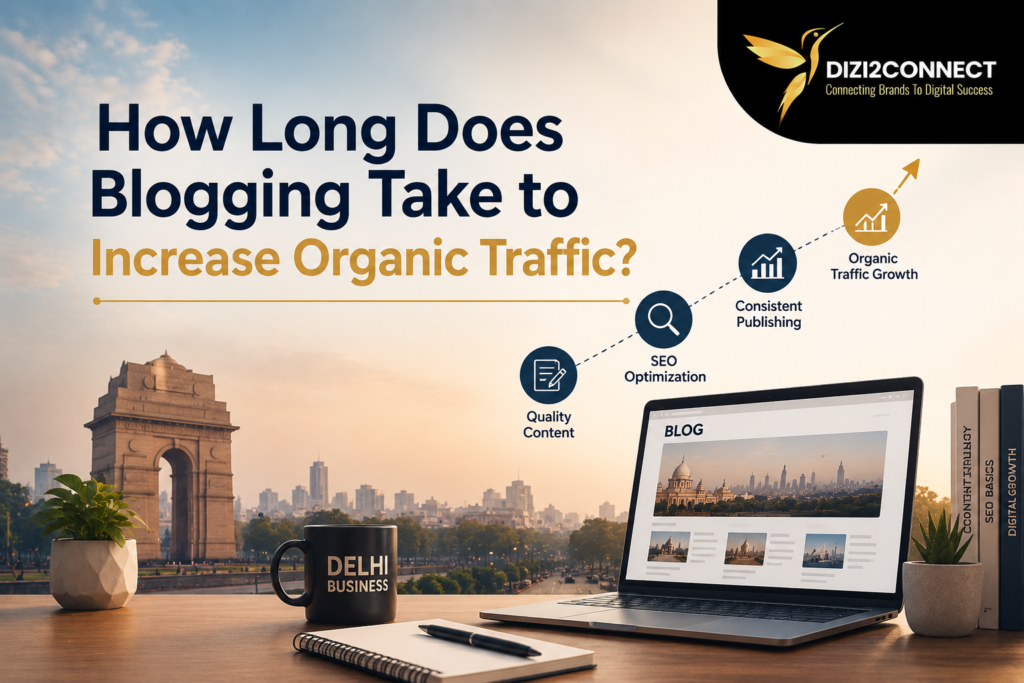
SEO blogging is a long-term investment rather than an instant marketing solution. Most businesses begin noticing measurable improvements within three to six months, depending on factors such as industry competition, website authority, content quality, keyword competition, and overall SEO optimization. Websites that consistently publish valuable and user-focused content generally see stronger and more sustainable growth over time.
Understanding how blogging helps Delhi businesses increase organic traffic also means recognizing that SEO success requires patience and consistency. Regular publishing, strategic keyword research, technical SEO improvements, quality backlink building, and continuous content updates all contribute to faster and more stable ranking improvements. Businesses that follow a well-planned content strategy often experience steady increases in organic traffic, search visibility, and qualified leads over the long term.
Best Practices for Blogging Success in Delhi
For businesses looking to understand how blogging helps Delhi businesses increase organic traffic, implementing SEO best practices is essential. From targeting local keywords to updating older content and monitoring performance, every step contributes to higher visibility, better user engagement, and sustainable business growth. Consistent improvements ensure your blog continues delivering value to both readers and search engines.
- Focus on User Intent: Create articles that answer real customer questions rather than writing only for search engines. Helpful content naturally attracts better engagement and rankings.
- Publish Consistently: Maintain a regular blogging schedule so search engines continue discovering fresh content. Consistency builds authority and audience trust over time.
- Target Local Keywords: Include Delhi-specific search terms naturally throughout articles. Local optimization improves visibility among nearby customers searching for relevant services.
- Optimize Every Blog: Write compelling meta titles, descriptions, headings, internal links, and image alt text to maximize SEO performance.
- Update Older Content: Refresh outdated statistics, examples, and keywords regularly. Updated content often regains rankings and attracts additional visitors.
- Measure Performance: Use Google Analytics and Google Search Console to monitor rankings, clicks, impressions, and user behavior. Data-driven improvements deliver stronger long-term results.
Conclusion
Understanding how blogging helps Delhi businesses increase organic traffic is essential for organizations aiming to build sustainable online visibility. Blogging improves keyword rankings, strengthens local SEO, builds authority, generates qualified leads, and creates long-term value that continues delivering results well beyond publication. Unlike paid advertising, quality blog content remains discoverable for years while supporting every stage of the customer journey.
Businesses that consistently publish valuable, keyword-optimized, and user-focused content position themselves ahead of competitors in Delhi’s highly competitive digital marketplace. By combining strategic keyword research, local SEO, internal linking, and high-quality content creation, blogging becomes one of the most reliable methods for increasing organic traffic, enhancing brand credibility, and achieving lasting business growth.
Explore Our Recent Posts
- Why Website Maintenance Is Important for Delhi Business Websites
- Why E-Commerce SEO Matters for Online Stores in Delhi
- Why Technical SEO Is Important for Delhi Business Websites
- How On-Page SEO Improves Google Rankings for Delhi Businesses
- Why Off-Page SEO Matters for Delhi Businesses
Frequently Asked Questions
1. How does blogging help Delhi businesses increase organic traffic?
Blogging helps Delhi businesses increase organic traffic by targeting keywords that customers search on Google. Every optimized blog creates another opportunity to rank in search results and attract relevant visitors. Over time, consistent blogging improves website authority, local SEO, and overall search visibility.
2. How many blogs should a Delhi business publish every month?
Most businesses should aim to publish two to four high-quality blog posts every month. Consistency is more valuable than producing large quantities of low-quality content. Regular publishing keeps websites active and improves long-term SEO performance.
3. Can blogging improve local SEO rankings?
Yes. Blogging supports local SEO by targeting Delhi-specific keywords, neighborhood names, local events, and customer-focused topics. This helps search engines understand your geographical relevance and improves visibility in local search results.
4. How long does SEO blogging take to show results?
SEO blogging generally begins producing noticeable improvements within three to six months. The timeline depends on competition, website authority, keyword difficulty, and content quality. Consistent optimization usually leads to stronger long-term growth.
5. What type of blogs generate the most organic traffic?
Educational guides, how-to articles, industry insights, comparison posts, FAQs, and problem-solving content typically perform best. These formats answer user questions while targeting valuable long-tail keywords. They also encourage backlinks and longer visitor engagement.
6. Is blogging better than paid advertising for long-term growth?
Blogging and paid advertising serve different purposes, but blogging delivers stronger long-term value. Paid campaigns stop generating traffic when budgets end, whereas SEO blogs continue attracting visitors for months or years. This makes blogging one of the most cost-effective digital marketing strategies for sustainable organic growth.
Tags: