

Today’s business environment demands faster communication, better customer engagement, and efficient marketing processes. Companies in Delhi often manage multiple marketing channels simultaneously, including email campaigns, social media, paid advertising, websites, and customer relationship management. Handling these tasks manually consumes valuable time and increases the possibility of errors. This is why businesses are increasingly investing in marketing automation solutions that streamline repetitive activities while improving overall performance.
Understanding How Marketing Automation Saves Time for Delhi Businesses are essential for organizations aiming to improve productivity without increasing operational costs. Marketing automation enables businesses to automate repetitive marketing tasks, nurture leads, personalize customer communication, and measure campaign performance from a single platform. Instead of spending hours on manual marketing activities, teams can focus on strategy, customer relationships, and business growth.
What Is Marketing Automation, and How Does It Work?
Marketing automation is the use of software and technology to automate repetitive marketing tasks, helping businesses save time while improving efficiency and customer engagement. Instead of manually sending emails, scheduling social media posts, or tracking leads, businesses can create automated workflows that perform these actions based on customer behavior.
This ensures consistent communication, reduces human errors, and allows marketing teams to focus on strategic planning and business growth. For companies looking to understand How Marketing Automation Saves Time for Delhi Businesses, automation offers a smarter way to manage campaigns, nurture leads, and build stronger customer relationships.
Key Components of Marketing Automation
- Automated Email Campaigns: Businesses can automatically send welcome emails, promotional offers, and follow-up messages based on customer actions, improving communication without manual effort.
- Lead Capture and Nurturing: Marketing automation collects leads from websites and landing pages, then nurtures them with personalized content until they are ready to make a purchase.
- Customer Segmentation: The software groups customers based on demographics, interests, or behavior, enabling businesses to deliver more relevant and targeted marketing messages.
- Workflow Automation: Predefined workflows automate repetitive tasks such as assigning leads, sending reminders, and updating CRM records, making daily operations more efficient.
- Performance Tracking and Analytics: Automation platforms provide real-time reports on campaign performance, customer engagement, and conversions, helping businesses make data-driven marketing decisions.
- Multi-Channel Marketing Integration: Businesses can manage email, social media, SMS, and website marketing from a single platform, ensuring a consistent customer experience across all channels.
Why Is Marketing Automation Important for Delhi Businesses?
Delhi is one of India’s most competitive business markets, where companies must respond quickly to customer inquiries, manage multiple marketing channels, and maintain strong customer relationships. Handling these responsibilities manually can be time-consuming and may lead to missed opportunities. Marketing automation simplifies these processes by automating repetitive tasks, improving communication, and ensuring that every customer receives timely and personalized interactions.
Understanding How Marketing Automation Saves Time for Delhi Businesses also highlight the importance of working smarter rather than harder. Whether it is a startup, an e-commerce brand, a healthcare provider, or a service-based company, marketing automation helps businesses increase productivity, improve lead management, and make data-driven decisions. By reducing manual work and streamlining workflows, companies can focus more on innovation, customer satisfaction, and long-term business growth.
Benefits of Marketing Automation for Delhi Businesses
- Saves Valuable Time: Automating repetitive tasks such as email marketing, follow-ups, and social media scheduling allows teams to focus on business strategy and customer relationships.
- Improves Lead Management: Marketing automation captures, organizes, and nurtures leads automatically, ensuring potential customers receive the right information at the right stage of their journey.
- Enhances Customer Engagement: Personalized emails, targeted offers, and automated responses help businesses build stronger relationships and keep customers engaged with their brand.
- Increases Marketing Efficiency: Businesses can manage multiple campaigns across different channels from a single platform, reducing manual effort and improving campaign consistency.
- Provides Real-Time Analytics: Automation tools generate detailed reports on campaign performance, customer behavior, and conversion rates, helping businesses optimize their marketing strategies.
- Supports Scalable Business Growth: As customer databases and marketing activities expand, automation enables businesses to handle increased workloads efficiently without significantly increasing operational costs.
How Marketing Automation Saves Time for Delhi Businesses in Daily Operations
Managing daily marketing activities manually can be challenging, especially for businesses in a fast-paced market like Delhi. Tasks such as responding to inquiries, sending follow-up emails, updating customer records, posting on social media, and tracking campaign performance require significant time and effort. Marketing automation streamlines these repetitive processes. by executing them automatically based on predefined workflows, allowing businesses to operate more efficiently while maintaining consistent customer communication.
Understanding How Marketing Automation Saves Time for Delhi Businesses means recognizing how automation improves everyday operations. Instead of spending hours on routine marketing tasks, teams can focus on strategic planning, customer engagement, and business development. Automated systems also reduce human errors, ensure timely follow-ups, and provide valuable insights through real-time analytics, enabling businesses to deliver better customer experiences while increasing productivity.
Ways Marketing Automation Improves Daily Business Operations
- Automates Customer Follow-Ups: The system automatically sends follow-up emails and reminders after customer inquiries, ensuring timely communication without requiring manual intervention.
- Schedules Social Media Content: Businesses can plan and schedule posts across multiple social media platforms in advance, maintaining a consistent online presence while saving valuable time.
- Manages Leads Efficiently: Marketing automation captures leads from websites and assigns them to the appropriate sales representatives and nurtures them with personalized content throughout the buying journey.
- Updates Customer Data Automatically: Customer information is synchronized with the CRM whenever users interact with emails, websites, or landing pages, eliminating repetitive data entry tasks.
- Generates Instant Performance Reports: Automation tools collect campaign data and create detailed reports on customer engagement, conversions, and ROI, helping businesses make faster and smarter decisions.
- Supports Multi-Channel Marketing: Businesses can manage email campaigns, SMS marketing, social media, and website communications from one platform, ensuring consistent messaging while reducing manual workload.
Which Marketing Tasks Can Be Automated?
Marketing automation is designed to simplify repetitive tasks that consume valuable time and resources. Instead of handling every marketing activity manually, businesses can automate routine processes to ensure faster execution, greater consistency, and improved customer experiences. From lead generation to campaign reporting, automation tools help organizations manage multiple marketing channels efficiently while reducing human errors.
For companies exploring How Marketing Automation Saves Time for Delhi Businesses, understanding which tasks can be automated is essential. Modern marketing automation platforms integrate with CRM systems, websites, social media platforms, and email marketing software, allowing businesses to create seamless workflows that improve productivity and support long-term business growth.
Marketing Tasks That Can Be Automated
- Email Marketing Campaigns: Businesses can automatically send welcome emails, newsletters, promotional offers, and follow-up messages based on customer actions, ensuring timely and personalized communication.
- Lead Capture and Lead Nurturing: Automation tools collect leads from websites, forms, and landing pages, then nurture them through targeted email sequences until they are ready for the sales team.
- Social Media Scheduling: Marketing teams can schedule posts across multiple social media platforms in advance, maintaining a consistent online presence without posting manually every day.
- Customer Relationship Management (CRM): Customer information, purchase history, and interactions are automatically updated within the CRM, reducing manual data entry and improving sales coordination.
- Campaign Performance Reporting: Automation software generates real-time reports on website traffic, email performance, conversions, and customer engagement, helping businesses make informed marketing decisions.
- Customer Segmentation and Personalization: Businesses can automatically group customers based on demographics, interests, or behavior and deliver personalized content that increases engagement and conversion rates.
Can Marketing Automation Improve Customer Engagement?
Customer engagement improves significantly when businesses deliver relevant content to the right audience at the right time. Marketing automation tracks customer behavior, preferences, and interactions across multiple channels, enabling businesses to send personalized emails, product recommendations, reminders, and promotional offers automatically. Instead of receiving generic messages, customers are presented with content that aligns with their interests and needs, making every interaction more meaningful.
Delhi businesses benefit greatly from marketing automation because it ensures consistent communication throughout every stage of the customer journey. Whether a customer is visiting a website for the first time, subscribing to a newsletter, or making repeat purchases, automated workflows provide timely and relevant interactions without manual intervention. This consistency helps businesses maintain strong customer relationships, improve satisfaction, and increase loyalty over time.
What Features Should Businesses Look for in Marketing Automation Software?
Choosing the right marketing automation software is essential for businesses that want to improve efficiency and maximize their return on investment. The ideal platform should not only automate repetitive marketing tasks but also integrate seamlessly with existing business tools such as CRM systems, email marketing platforms, and analytics software. A user-friendly interface, scalability, and reliable customer support are also important factors to consider before making a decision.
For organizations looking to understand How Marketing Automation Saves Time for Delhi Businesses, selecting software with the right features can significantly improve productivity and customer engagement. A comprehensive marketing automation solution enables businesses to manage campaigns, track customer interactions, analyze performance, and personalize communication from a single platform, making daily marketing operations more effective and organized.
Essential Features of Marketing Automation Software
- Workflow Automation: A visual workflow builder helps businesses automate repetitive tasks such as email sequences, lead assignments, and customer follow-ups with minimal manual effort.
- CRM Integration: Seamless integration with Customer Relationship Management (CRM) software ensures customer data is updated automatically, improving lead tracking and sales coordination.
- Email Marketing Automation: Built-in email marketing tools allow businesses to create personalized campaigns, automate responses, and monitor open rates, click-through rates, and conversions.
- Advanced Analytics and Reporting: Real-time dashboards provide valuable insights into campaign performance, customer behavior, lead generation, and return on investment, enabling data-driven decisions.
- Multi-Channel Marketing Support: The software should manage email, SMS, social media, websites, and other communication channels from one platform to deliver a consistent customer experience.
- Lead Scoring and Customer Segmentation: Intelligent lead scoring identifies high-potential prospects, while customer segmentation enables businesses to deliver personalized marketing messages based on user behavior and preferences.
How Can Delhi Businesses Successfully Implement Marketing Automation?
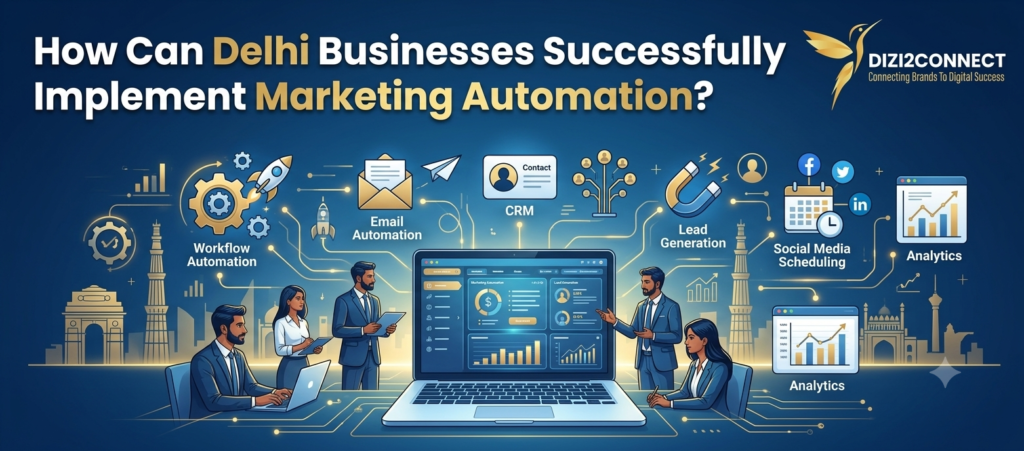
Implementing marketing automation successfully requires careful planning, the right technology, and a clear understanding of business goals. Delhi businesses should begin by identifying repetitive marketing tasks that consume valuable time, such as email follow-ups, lead management, and social media scheduling. Choosing a reliable marketing automation platform that integrates with existing CRM and digital marketing tools helps create smooth workflows and improves overall operational efficiency.
Businesses should also monitor campaign performance regularly and refine their automation strategies based on customer behavior and analytics. Understanding How Marketing Automation Saves Time for Delhi Businesses are not just about adopting new software but also about optimizing processes to deliver better customer experiences. Continuous testing, employee training, and workflow improvements ensure that automation supports long-term business growth while increasing productivity and marketing effectiveness.
Steps to Successfully Implement Marketing Automation
- Define Clear Marketing Goals: Identify objectives such as increasing lead generation, improving customer engagement, or boosting sales so the automation strategy aligns with overall business goals.
- Choose the Right Automation Platform: Select software that offers CRM integration, email marketing, analytics, and workflow automation while matching your business size, budget, and future growth plans.
- Map the Customer Journey: Understand how customers interact with your business from awareness to purchase, then create automated workflows that provide relevant communication at every stage.
- Train Your Marketing and Sales Teams: Ensure employees understand how to use the automation platform effectively so they can manage campaigns, monitor performance, and optimize workflows efficiently.
- Test and Optimize Workflows Regularly: Monitor automated campaigns, perform A/B testing, and analyze customer responses to improve engagement, conversions, and overall marketing performance.
- Measure Results Using Analytics: Track key performance indicators such as lead conversion rates, email engagement, website traffic, and return on investment to continuously refine your marketing automation strategy.
What Are the Future Trends of Marketing Automation?
Marketing automation continues to evolve as businesses adopt advanced technologies to improve customer experiences and streamline their marketing efforts. Innovations such as artificial intelligence (AI), machine learning, predictive analytics, and omnichannel marketing are transforming how companies interact with customers. These technologies enable businesses to deliver highly personalized campaigns, automate complex workflows, and make faster, data-driven decisions that improve overall marketing performance.
For organizations exploring How Marketing Automation Saves Time for Delhi Businesses, keeping up with future trends is essential for maintaining a competitive edge. As customer expectations continue to grow, businesses that embrace modern automation technologies will be better equipped to increase efficiency, enhance customer engagement, and achieve sustainable growth. Investing in future-ready marketing automation solutions today can help businesses stay ahead in the rapidly changing digital landscape.
Emerging Trends in Marketing Automation
- Artificial Intelligence (AI) Integration: AI-powered automation analyzes customer behavior, predicts buying patterns, and delivers highly personalized marketing messages that improve engagement and conversions.
- Predictive Analytics: Advanced analytics help businesses forecast customer needs and purchasing behavior, enabling marketers to create more effective and targeted campaigns.
- Omnichannel Marketing Automation: Businesses can manage customer interactions across email, social media, SMS, websites, and mobile apps, ensuring a seamless and consistent customer experience.
- Hyper-Personalization: Automation tools use real-time customer data to deliver customized recommendations, offers, and content that increase customer satisfaction and loyalty.
- Voice Search and Conversational Marketing: As voice assistants and chatbots become more popular, businesses are integrating automated conversational marketing to provide instant customer support and personalized interactions.
- Privacy-Focused Automation: Future marketing automation platforms will place greater emphasis on data privacy, consent management, and compliance with evolving regulations while maintaining personalized customer experiences.
Conclusion
Marketing automation has become an essential solution for businesses that want to improve efficiency, strengthen customer relationships, and stay competitive in Delhi’s fast-moving digital marketplace. By automating repetitive tasks such as email marketing, lead nurturing, social media scheduling, CRM updates, and campaign reporting, businesses can save valuable time while reducing manual errors.
This enables marketing teams to focus on strategic planning, customer engagement, and business growth rather than routine administrative work. Understanding How Marketing Automation Saves Time for Delhi Businesses highlights the long-term value of investing in the right automation tools and strategies. As technologies such as artificial intelligence, predictive analytics, and omnichannel marketing continue to evolve, automation will play an even greater role in helping businesses deliver personalized customer experiences and achieve sustainable growth.
Explore Our Recent Posts
- How Branding Helps Delhi Businesses Stand Out Online
- Why Logo Design Impacts Brand Recognition for Delhi Businesses
- Why Mobile App Marketing Matters for Businesses in Delhi
- How YouTube Marketing Helps Delhi Businesses Grow Faster
- Why Remarketing Ads Are Important for Delhi Businesses
Frequently Asked Questions
1. How does marketing automation save time for Delhi businesses?
Marketing automation reduces manual marketing activities by automating repetitive tasks such as email campaigns, customer follow-ups, lead management, and reporting. Employees spend less time on routine work and more time developing business strategies. This increases productivity while improving customer communication.
2. Is marketing automation suitable for small businesses?
Yes. Small businesses benefit significantly because automation reduces operational workload without requiring large marketing teams. Many affordable platforms offer scalable features suitable for startups and growing businesses. Even basic automation can improve customer engagement and lead generation.
3. Which industries benefit most from marketing automation?
Industries including healthcare, education, retail, real estate, finance, hospitality, and professional services benefit greatly from marketing automation. Any business managing customer inquiries, appointments, or online marketing campaigns can improve efficiency through automated workflows.
4. Does marketing automation replace human marketers?
No. Marketing automation supports marketers rather than replacing them. Automation handles repetitive processes while marketing professionals focus on creativity, strategy, customer relationships, branding, and campaign optimization. Human expertise remains essential for successful marketing.
5. What is the biggest advantage of marketing automation?
The greatest advantage is increased efficiency. Businesses automate repetitive marketing activities, reduce manual errors, improve customer engagement, and generate detailed performance reports automatically. This saves valuable time while improving marketing results and return on investment.
6. How do businesses choose the right marketing automation software?
Businesses should evaluate ease of use, CRM integration, workflow capabilities, analytics, scalability, customer support, and pricing. Selecting software that aligns with business objectives ensures long-term value and smoother implementation. Testing different platforms through free trials can also help identify the most suitable solution.
Tags: